
Plastic vs Bamboo vs Titanium Cutting Boards: Which Is Best for Home Kitchens?
Choosing a cutting board seems simple—until you actually start cooking every day.
After a few months of use, most people notice the same things:
Deep knife grooves
Boards that look worn fast
Stains that don’t come out
A surface that just feels… tired
That’s usually when the question comes up:
Is there a better cutting board material?
In this guide, we’ll break down plastic, bamboo, and titanium cutting boards—how they perform over time, what kind of kitchens they’re best for, and which option makes the most sense depending on how you cook.
Why Cutting Board Material Matters More Than You Think
Your cutting board:
Touches nearly every ingredient
Takes constant knife impact
Gets washed more than almost any other kitchen tool
So material affects:
How long it lasts
How often it needs replacing
How it looks on your counter
How much effort it takes to maintain
Let’s break each option down honestly.

Plastic Cutting Boards
Plastic boards are everywhere—for one main reason: they’re cheap and easy.
Pros
Lightweight
Inexpensive
Dishwasher friendly
Easy to find anywhere
Cons
Surface wears down quickly
Deep grooves form fast
Looks worn even when “clean”
Needs frequent replacement
Plastic boards work fine short-term, but over time the surface breaks down from repeated knife contact. That wear shows up as visible grooves, rough texture, and white marks that never fully go away.
Best for:
Temporary use, travel kitchens, or situations where replacement isn’t a concern.
Bamboo Cutting Boards
Bamboo has become one of the most popular upgrades from plastic—and for good reason.
Pros
Natural, warm appearance
Harder than many woods
Lightweight but sturdy
Better long-term durability than plastic
Things to Know
Requires occasional oiling
Harder surface than softer woods
Should be dried properly after washing
Bamboo strikes a strong balance between function and aesthetics. It looks good on the counter, holds up well for daily prep, and feels more intentional than plastic.
Best for:
Home cooks who want a natural look, solid durability, and don’t mind light maintenance.

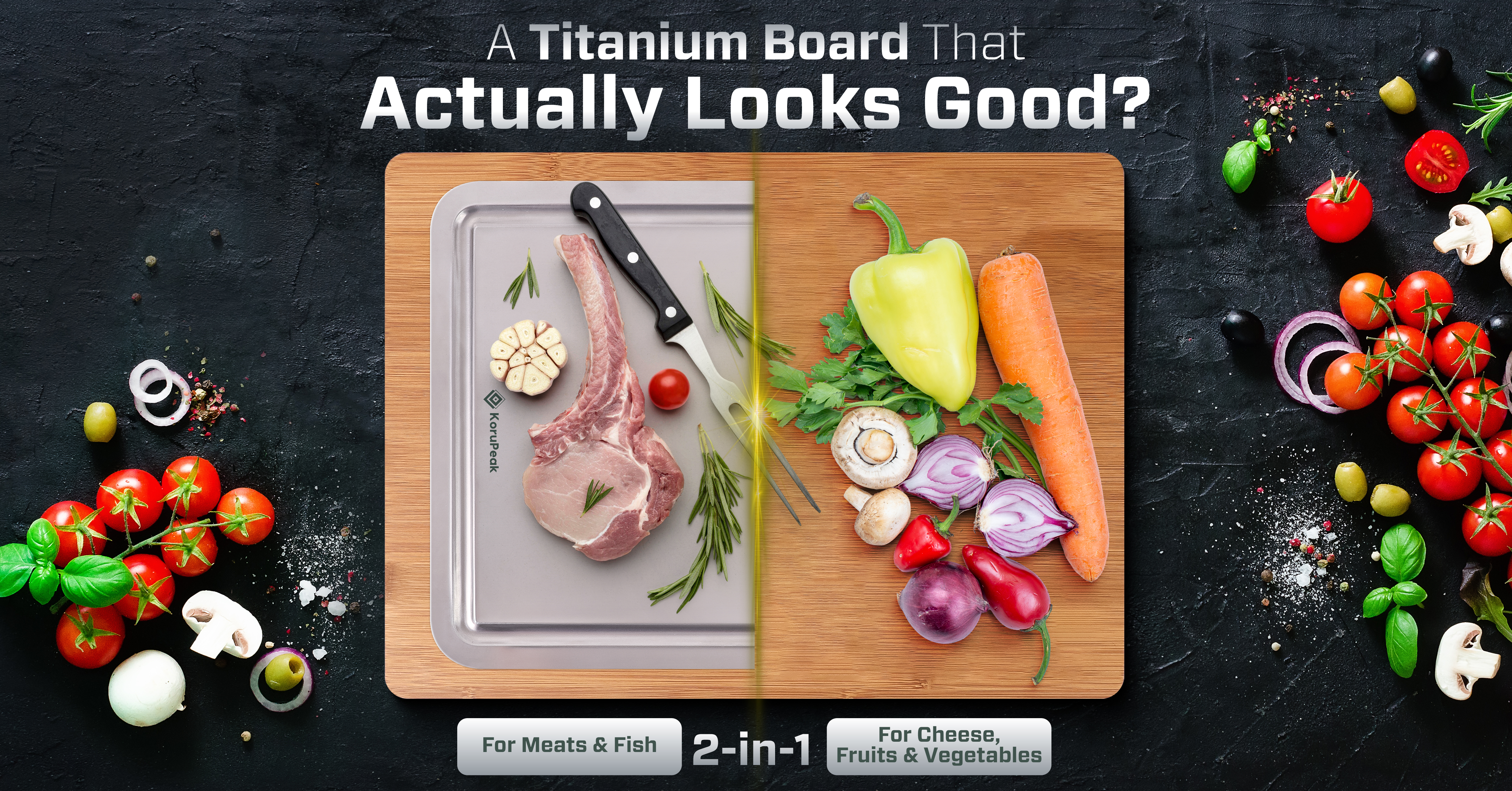
Titanium Cutting Boards
Titanium is newer to the kitchen world—but it’s gaining attention for a reason.
Pros
Extremely durable
Smooth, consistent surface over time
Doesn’t warp, swell, or break down
Easy to wipe clean
No oiling or special care
Unlike plastic, titanium doesn’t wear down into grooves. And unlike wood or bamboo, it doesn’t require conditioning or drying rituals.
For many families, that consistency is the appeal—it looks the same after months of use as it did on day one.
Best for:
Busy kitchens, families who cook daily, and anyone who wants a low-maintenance, long-lasting prep surface.

So… Which Cutting Board Is Best?
There’s no one-size-fits-all answer—but there is a clear direction.
Plastic works short-term but wears out fast
Bamboo is a great upgrade for natural style and better longevity
Titanium is ideal for people who want durability, simplicity, and minimal upkeep
If you cook often, the board you use every day should:
Hold up to real use
Look good in your kitchen
Not need constant replacing
That’s where bamboo and titanium consistently outperform plastic.
A Smarter Way to Upgrade Your Kitchen
Most people replace cutting boards reactively—when they look bad or stop working well.
A smarter approach is choosing a surface that:
Lasts longer
Fits your cooking style
Matches how you want your kitchen to feel
Whether that’s the natural warmth of bamboo or the modern simplicity of titanium, both offer a clear step up from disposable plastic boards.
Want help deciding which material fits your kitchen best?
Start by looking at how often you cook, how much maintenance you’re willing to do, and whether you want your cutting board stored—or displayed.
Small upgrades like this are what turn everyday cooking into something more enjoyable.